Explore academic impact - without flattening it into a rank.
Rankless visualizes the global flow of ideas across universities, journals, scholars, and countries - revealing who influences whom, where knowledge travels, and which topics bind the world together.
Latest features
Real profiles, citation trails, and collaboration networks — built from open data and explorable in a click.
Claim your profile and correct your record.
Rankless builds author profiles automatically from open data, so the picture isn't always perfect. Sign in with your ORCID iD to take ownership of yours.
Add missing papers, remove ones that aren't yours, and merge duplicate records. Every edit is written to a public, revocable ledger — your corrections, transparently tracked.
Sign in with ORCID →We store only your ORCID iD, name, and the edits you make — see our Privacy notice.
Some papers don't just get cited — they reshape a field.
Rankless flags a scholar's hit papers and shows where that influence landed.
Each arc is a hit paper, climbing by citations from publication to today.
Follow a paper's citations year by year, or split them across the fields and topics that picked it up — and align trajectories.
See an author's hit papers →See a collaboration unfold over a career.
Every co-author placed by the years they published together, each mark a shared paper — the accented ones are hit papers.
How does a scholar stack up against their field?
See how a scholar's citations break down by field and grow over time — measured side by side against comparable peers, never flattened into a single rank.
Research is a team sport.
The scholars most often cited alongside an author, linked wherever they've published together — click into the network to read the papers behind each connection.
Explore the network →Smarter search
Faster, typo-tolerant search with a dedicated results page and browser search-bar support.
All works & export
Every paper, sortable and filterable, with clean references to export — BibTeX, APA, MLA, Chicago.
Shared papers
Click any co-author or connecting line to read the exact papers behind the link.
Standing badges
Top 10% to top 0.01% — see exactly where an entity stands in each of its fields.
Spotlights
Jump straight into examples across institutions, countries, journals, and scholars.
Explore institutional impact
Influence by field, geography, and collaboration networks.
Individual trajectories
Track citation origins and topical niches across careers.
See where knowledge travels
Which countries cite which - and on what topics.
Field-shaping venues
Topical breadth, citation reach, and cross-disciplinary bridges.
How does Rankless work?
Under the hood, Rankless combines open bibliographic data, network science, and interactive design to surface context that rankings miss.
OpenAlex + enhancements
We build on OpenAlex snapshots and enrich with journal metrics and curated identifiers to create a comprehensive citation graph.
Citations, topics, collaborations
Rankless constructs multi-layer graphs to show influence by domain, geography, and co-authorship - so you can follow the story behind the metrics.
Click to go deeper
Every chart and map is explorable. Click to jump from a bird’s-eye view to institutions, journals, and scholars shaping a field.
Why Rankless?
We need to understand more and rank less.
Rankings flatten complexity into a single number. Rankless restores the context: domain, geography, collaboration, and time. Use it to make better-informed decisions - whether you’re a student, researcher, policymaker, or funder.
Rankless is an experimental data visualization project that allows users to explore the impact of thousands of universities. It is built on the idea that universities generate impact that is specific to a geography and to certain topics, and that rankings obscure that impact by reducing it to a single dimension. By transcending rankings, we highlight a university’s multidimensional impact by showing you who they work with and who cites them. To understand more, sometimes, we need to rank less.
Who’s behind it?
Rankless is created by the Center for Collective Learning (CCL) at Corvinus University of Budapest, with a small, multidisciplinary team.

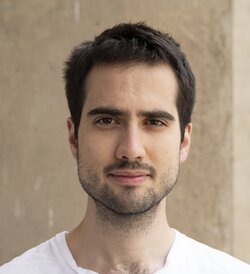

Júlia Vanda Dénes
Visual Design


Rankless was developed at the Center for Collective Learning (CCL) at Corvinus University of Budapest by a team of five people. The main person behind the project is Endre Borza, an economist working as a data engineer who constructed Rankless from the ground up. The graphic and interaction design of Rankless is the work of Máté Barkóczi and Júlia Vanda Dénes, contracted for design work at CCL. Vera Hamar, Executive Director of CCL, supported Rankless as a project manager and coordinator. César A. Hidalgo, Director of CCL, supervised the project.
The Center for Collective Learning (CCL) is an interdisciplinary research laboratory with offices in Toulouse, France and Budapest, Hungary. For more than a decade, CCL has advanced the state of the art in economic development, data visualization, and applications of artificial intelligence. Previous data visualization projects by members of CCL include The Observatory of Economic Complexity, Pantheon, and Data USA, among dozens of others.
Rankless was created at the Center for Collective Learning at the Corvinus Institute for Advanced Studies (CIAS) at Corvinus University in Budapest. This project was supported by the Learn Data ERA Chair from the European Research Executive Agency.
Contact
You can reach us by contacting Veronika and Endre directly @ rankless@centerforcollectivelearning.org
Frequently Asked Questions
Questions and answers about data sources used, update frequency, filtering, impact measurement, extensions and visualization.
We use open, up-to-date data, process it with transparent methods and visualize the results in an intuitive, unique way.
What are your data-sources?
What are indexed citations?
Can I download/export Rankless data?
How often do you update your data?
How accurate is your data?
Do you filter the data?
How do you assign papers and journals to subject categories?
How do you measure impact?
What kind of visualization engine do you use?
How do you measure specialization?
Created by